
Originally published in St. Louis Jewish Light
Few Americans realize that one of the country’s most beloved entertainers was born Israel Iskowitz, the orphaned son of impoverished Jewish immigrants on New York’s Lower East Side. He later changed his name to Eddie Cantor—the comedian, singer, actor and radio personality who entertained millions. But when European Jewry came under assault during the 1930s, Cantor never hesitated to speak publicly as a Jew, even when doing so invited criticism and placed his career at risk. When history demanded that he choose which identity would speak first, Eddie Cantor answered as a Jew.
As America celebrates the 250th anniversary of its independence, Cantor’s example invites us to ask a larger question: How should Jews understand themselves while living in America? Are we Jewish Americans—or American Jews?
Enjoy what you're reading? Subscribe for more!
At first glance, the distinction seems little more than wordplay. After all, both phrases describe Jews who proudly call America home. Yet perhaps the difference is more than linguistic. It may reflect something deeper about how we understand ourselves.
The question is not whether we are patriotic. Nor is it how deeply we cherish either America or Judaism. Rather, it is which identity each phrase places first.
For some Jews, Judaism is understood primarily as a source of universal moral values—justice, compassion and creating a better world. For others, Judaism begins with belonging to the Jewish people, an eternal nation whose shared history, memory and covenant have shaped Jewish life for more than three millennia. Both perspectives see themselves as part of the Jewish people and embrace many of the same ideals, yet they begin from different starting points. And where we begin often shapes where we arrive.
Perhaps this helps explain why thoughtful, committed Jews can respond so differently to many of the questions confronting our community today. Recent disagreements over Israel, antisemitism, Jewish education, religious observance and communal responsibility have revealed differences that often run deeper than politics or religious affiliation. They reflect differing understandings of Jewish identity itself.
The point is not that one group loves America more than another. American Jews across the religious and political spectrum have every reason to feel profound gratitude toward this country. The United States has offered the Jewish people freedoms and opportunities unmatched in much of our history. Here, Jews have flourished as citizens while contributing richly to American life. That is a blessing worthy of celebration, especially as our nation marks this historic anniversary.
Yet gratitude alone does not answer the deeper question of identity.
For my part, I think of myself as an American Jew—a Jew whose family has been blessed to now make its home in America, while some of our children have built their lives in Israel. I cherish this country, pray for its welfare, and remain deeply grateful for the liberties it has afforded my family and generations of Jews before us. But my citizenship, precious as it is, does not define the deepest part of who I am. That identity was forged long before the United States came into being. It binds me to a people, a history and a covenant that transcends every country in which Jews have lived.
America’s 250th anniversary is a fitting moment to reflect not only on what it means to be an American, but also on what it means to be a Jew living in America. Whether we ultimately describe ourselves as Jewish Americans or American Jews, the more important question remains: which identity does each phrase place first? Our understanding not only shapes how we see ourselves, but also how we meet our responsibilities to one another, to our country and to the Jewish people.
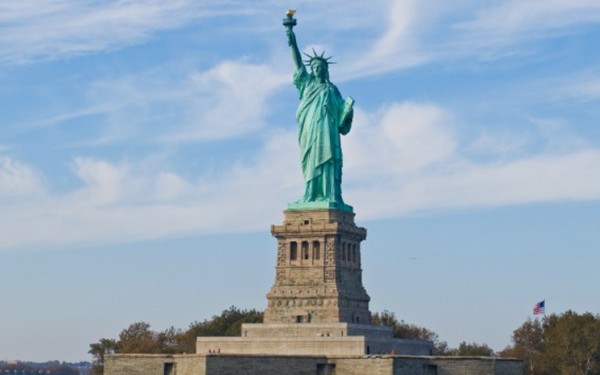
Photo: Statue of Liberty, NY by William Warby, licensed under CC BY 2.0, via Wikimedia Commons